
Beyond Traditional Marketing: The New Architecture of Technology and Defence Marketing
In high-stakes defence, technology, and strategic infrastructure sectors, traditional promotional tactics are no longer enough; modern B2G and B2B engagement demands data-driven market intelligence, cross-functional engineering alignment, and sovereign capability positioning.
· 7 min read

ABUJA, NIGERIA: Marketing is undergoing a significant transformation, particularly in industries where technology, national security and industrial development intersect. For organisations operating in defence, advanced technology and strategic infrastructure, the traditional methods of corporate promotion are no longer sufficient to communicate the full value of their capabilities.
In these sectors, marketing extends beyond product visibility, public announcements and brand recognition. It involves demonstrating technical competence, communicating operational relevance, understanding institutional priorities and establishing the credibility required to build long-term partnerships.
This shift is particularly important in business-to-government (B2G) and business-to-business (B2B) markets, where decisions are often shaped by technical evaluations, regulatory requirements, procurement processes and broader institutional objectives. As governments and organisations increasingly invest in indigenous technology, domestic manufacturing and strategic infrastructure, the way capabilities are presented and evaluated is becoming just as important as the capabilities themselves.
From Corporate Announcements to Strategic Capability Positioning
Traditional corporate marketing has often relied on announcements, media coverage, product presentations and promotional campaigns to establish visibility. While these remain relevant, organisations operating in complex technology and industrial markets must communicate a much broader proposition.
Government institutions and corporate partners are not simply evaluating products. They are assessing the organisations behind them, their technical capacity, reliability, delivery structures and ability to address specific requirements.
In defence and strategic technology markets, this may involve demonstrating the relevance of indigenous manufacturing, the availability of specialised systems, technology development capacity, integration potential and the ability to support evolving operational needs.
The growing emphasis on local production and technology transfer across emerging economies also introduces a wider industrial dimension. Organisations are increasingly expected to demonstrate how their capabilities contribute to domestic expertise, strengthen local supply chains and support broader economic and strategic objectives.
Marketing, therefore, must evolve from communicating what an organisation offers to explaining the value, application and wider significance of what it can deliver.

Technology Is Changing How Capabilities Are Marketed
Advances in digital technology are creating new opportunities for organisations to present complex products, systems and industrial capabilities.
Data analytics, artificial intelligence, digital simulation and immersive visualisation are changing how organisations understand markets, communicate technical information and engage prospective partners.
Emerging approaches such as digital twins and simulation environments can allow stakeholders to examine how a system is designed, how different components interact and how a proposed solution may perform under defined conditions. Similarly, geospatial visualisation and data-led demonstrations can help explain the potential applications of technologies in areas such as infrastructure planning, surveillance and environmental monitoring.
Artificial intelligence and data analytics are also expanding the possibilities for market intelligence. Organisations can use these tools to identify industry developments, study institutional requirements, understand changing procurement priorities and make more informed decisions about market positioning.
These technologies do not replace technical validation, physical demonstrations or professional engagement. Rather, they provide additional ways to make complex capabilities easier to understand and evaluate.
In defence and industrial markets, this distinction is particularly important. Demonstrations must be accurate, appropriately authorised and consistent with the actual capabilities of the technology being presented. Operational information must also be handled responsibly, especially where national security, sensitive infrastructure or protected institutional data are involved.
The objective is not simply to make a product appear advanced. It is to help decision-makers understand its technical value, practical application and relevance to an identifiable requirement.
Understanding the Stakeholder: The Importance of Tailored Value Propositions
One of the defining characteristics of B2G and B2B marketing is the diversity of stakeholders involved in institutional decision-making.
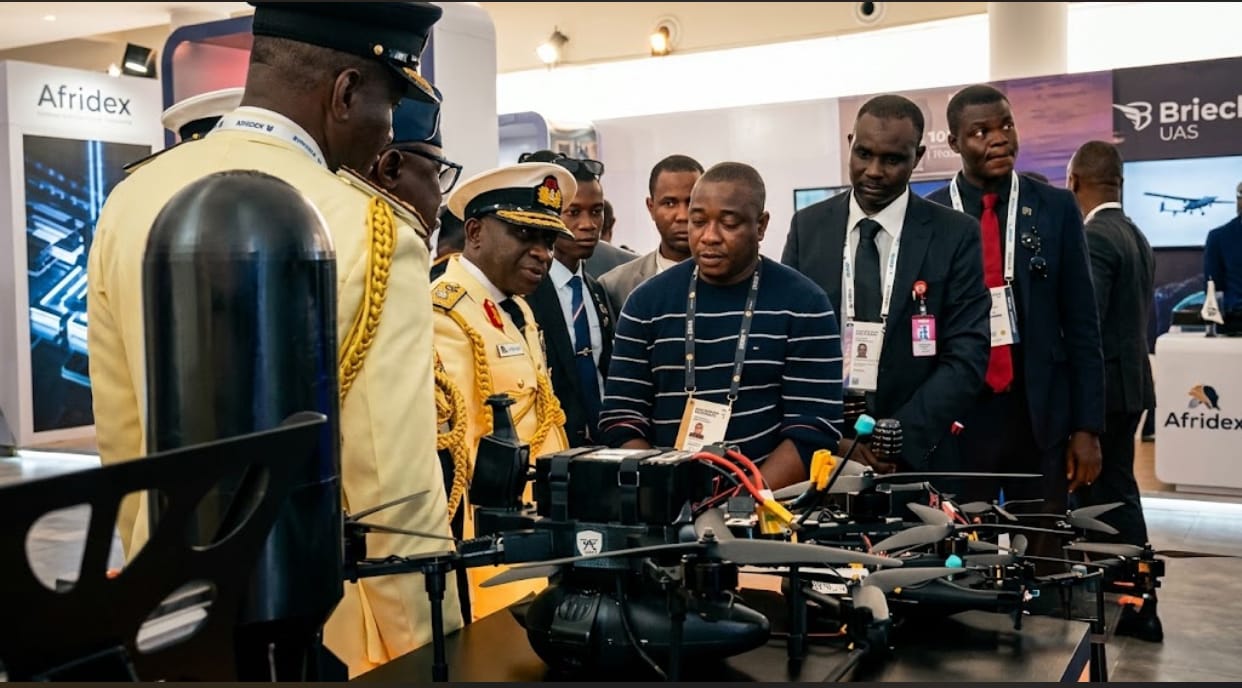
A military institution may prioritise operational effectiveness, system reliability, interoperability and mission requirements. A civil defence organisation may be more concerned with public safety, emergency preparedness and response capacity. A government ministry may evaluate industrial development, policy alignment, regulatory compliance and economic value, while a regional trade body may focus on partnerships, investment opportunities and cross-border cooperation.
Although these stakeholders may engage with the same organisation, their priorities are not necessarily identical.
Effective marketing must recognise these differences and communicate relevant value propositions without altering the facts or overstating what a product or service can achieve.
This requires more than audience segmentation. It calls for institutional intelligence: an understanding of the stakeholder’s responsibilities, operating environment, strategic priorities and decision-making processes.
Tailored engagement also means presenting information in a format that speaks to the needs of each audience. Technical teams may require specifications and integration details, while executive leadership may be more interested in strategic value, organisational capacity and long-term implications.
The ability to translate one capability into several relevant institutional propositions is becoming an essential part of modern technology marketing.
Where Marketing Meets Engineering, Research and Strategy
Marketing complex technology cannot function effectively as an isolated corporate activity. Its success depends on a close relationship with the teams responsible for developing, testing, delivering and managing the capabilities being presented.
Research and development teams provide insight into innovation and technical progress. Systems engineers explain functionality, integration and performance considerations. Compliance teams help ensure that communications reflect applicable regulatory and operational requirements. Executive leadership provides the strategic direction that connects organisational capabilities with broader business objectives.
When these functions operate in isolation, marketing can struggle to communicate technical value accurately. There is also a risk of creating expectations that do not reflect a product’s actual specifications, development stage or delivery capacity.
Cross-functional integration helps close this gap. It allows marketing professionals to develop a more complete understanding of the organisation’s capabilities and communicate them with greater clarity, consistency and credibility.
This is particularly important in defence and strategic technology markets, where trust is built through technical substance, institutional understanding and responsible representation.
Marketing must understand the capability before it can effectively communicate its value.
EIB Group and the Importance of Integrated Capability Positioning
The changing demands of technology and institutional markets are particularly relevant to organisations with capabilities distributed across multiple specialised businesses.
EIB Group operates across areas that include autonomous systems, defence technology, digital forensics, tactical manufacturing and strategic infrastructure. Its business ecosystem includes BRIECH UAS, POCTOVA and GIGA FORENSICS, among other specialised businesses.
These areas represent different technical disciplines and address distinct market requirements. Unmanned aerial systems, tactical apparel and digital forensic capabilities, for instance, require different forms of technical explanation, stakeholder engagement and market positioning.
BRIECH UAS operates within the unmanned aerial systems space, where conversations around capability may involve platform functionality, surveillance applications, operational requirements and system performance. POCTOVA’s work in tactical apparel and manufacturing belongs to a different industrial context, where product suitability, manufacturing standards and end-user requirements are important considerations. GIGA FORENSICS operates in the digital forensics and investigative technology space, where technical competence, information integrity and responsible handling of digital evidence are central to the value proposition.
The broader implication is that an organisation with multiple specialised businesses requires more than disconnected promotional activities. It needs a coherent approach to presenting its capabilities while recognising the technical and institutional differences between its operating areas.
For EIB Group, this creates an important distinction between communicating the identity of the wider Group and explaining the specific capabilities of each business within its ecosystem.
An integrated approach to marketing and institutional engagement can help make these relationships clearer to prospective partners, government stakeholders and the wider market. It also creates room for more informed conversations around indigenous industrial capacity, technology development and opportunities for collaboration.
As African markets continue to explore domestic manufacturing, technological innovation and strategic partnerships, the ability to communicate these capabilities clearly will remain an important part of how organisations establish their relevance.

The Future of Marketing Is Built on Credibility and Institutional Value
The future of technology and defence marketing will be shaped by the convergence of market intelligence, digital innovation, technical communication and institutional engagement.
Emerging tools such as artificial intelligence, digital twins, advanced analytics and immersive demonstrations will continue to influence how organisations research markets and present complex capabilities. However, technology alone will not determine the effectiveness of a marketing strategy.
The quality of the underlying capability, the accuracy of the information presented, the organisation’s understanding of its stakeholders and its ability to build credible relationships will remain fundamental.
For African organisations seeking to participate more actively in global technology and industrial markets, this evolution presents both an opportunity and a responsibility. Visibility must be supported by demonstrable competence. Innovation must be communicated with clarity. Institutional engagement must be built on a sound understanding of the requirements and expectations of the markets being served.
Ultimately, modern technology marketing is not simply about attracting attention. It is about translating capability into value, connecting innovation with institutional needs and building the confidence required for meaningful, long-term partnerships.